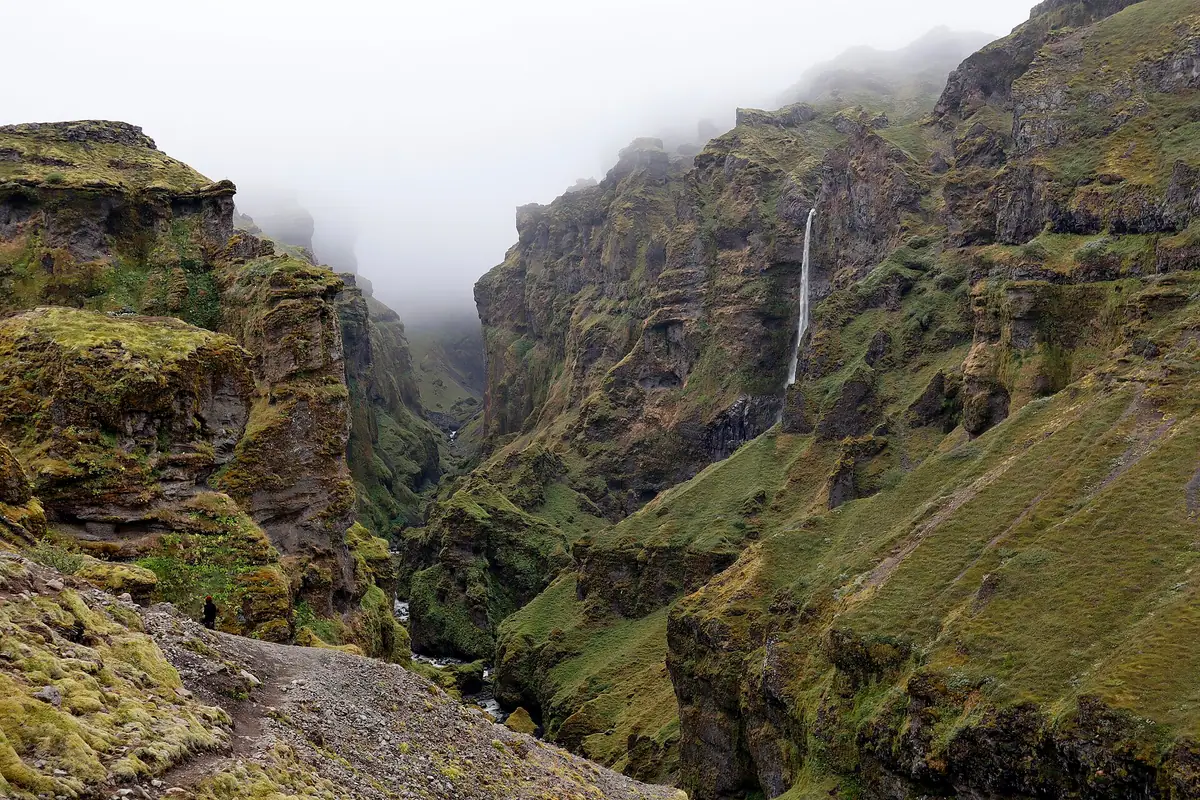
The canyon is open year-round, weather permitting, but it is not the same walk in every month. The moss, the water in the streams, the length of the day and the state of the gravel road all change through the year — and so does what can go wrong.
Here is how the seasons actually play out at Múlagljúfur, so you can choose a month and a time of day with your eyes open.
The short answer
May to September is the practical season. July is the greenest, with the moss at full colour and light lasting most of the night. August into early September usually gives the best balance of weather, colour and quiet, and the trail is at its driest. From October to April the days are short, the access road is not maintained and the exposed sections can ice over; that half of the year is for experienced, properly equipped parties only.
| Period | On the trail | Light |
|---|---|---|
| May–June | High water at the crossings, soft ground, nesting birds | Long and lengthening; barely dark by late June |
| July | Peak green, warmest walking, busiest on the road | Near round-the-clock; golden hour lasts for hours |
| Aug–early Sep | Driest trail, best weather-to-crowd balance | Real nights return; long evening light |
| Late Sep–Oct | Moss turning bronze, first snow on the rim, wet ground | Low, directional, shortening fast |
| Nov–April | Ice on exposed sections, road unploughed | Four to seven hours of daylight |
Spring: high water and soft ground
From late April into June, snowmelt and spring rain fill every stream coming off Öræfajökull. That is good news for the waterfalls and bad news for your feet. The one or two stream crossings on the way in, a rock hop in August, can run wide enough in May that most people simply accept wet boots and walk through. The path itself is muddy and soft, and soft ground is easily damaged: please stay on the worn line rather than stepping round the puddles, which is how the path has started to braid on the first hill.
The fulmars return to the canyon cliffs in May and stay into August. If you are walking in spring or early summer, keep voices down near the walls and leave drones in the car.
Summer: green walls and long light
Summer is why the canyon is famous. By July the walls are saturated green, both waterfalls are running, and the birds are working the updrafts below the rim. Around midsummer the sun sets for only a few hours and the sky never gets properly dark, so you can start late, walk in the evening light and still come out with daylight to spare.
It is also the busiest time on Route 1. The canyon itself rarely feels crowded, because it asks for a real walk, but the car park is at its fullest around the middle of the day. Early morning and late evening are often close to empty, and the light is better then too.

Late summer and autumn: the quiet window
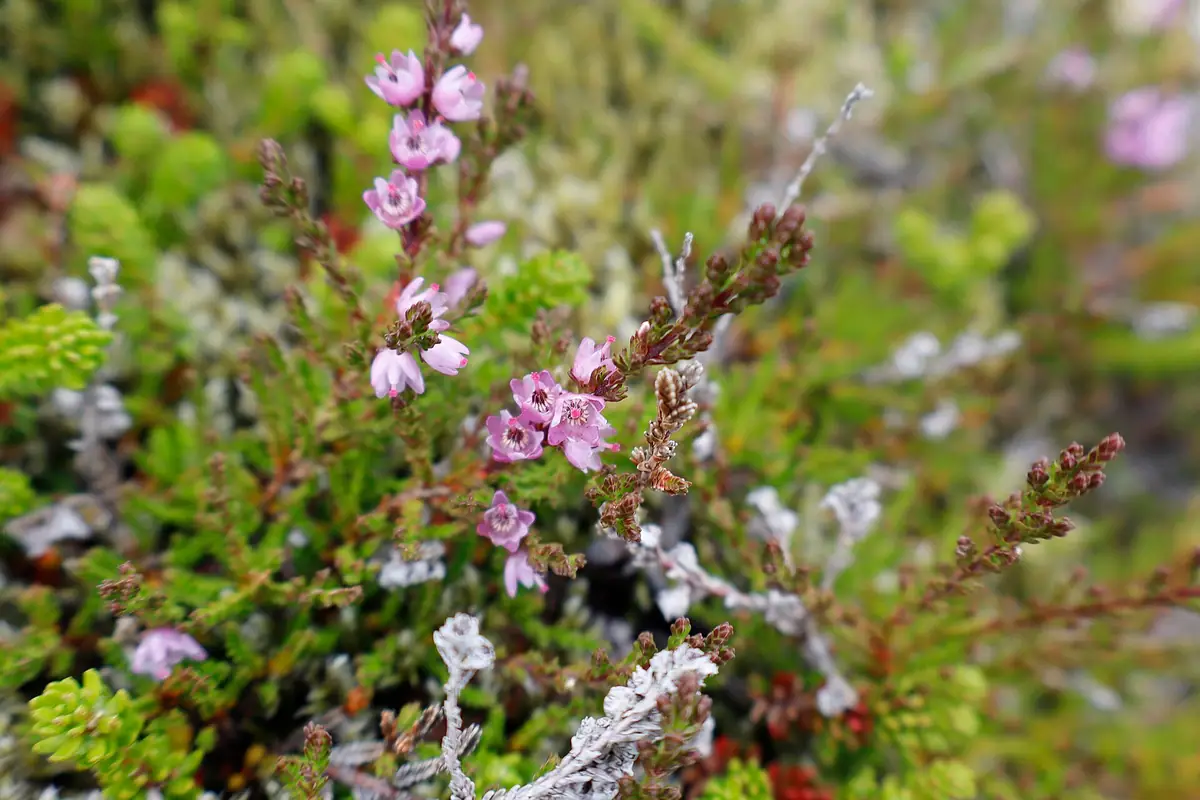
August and early September are our favourite weeks to recommend. The streams have dropped, the path has had time to dry, the crowds on the road thin as the month goes on, and the light becomes lower and warmer again. Nights return, which matters if you plan to start or finish in the dark: carry a head torch from mid-August on.
From late September the moss turns bronze and the first snow often dusts the rim. It is a beautiful time to be here, but the ground is wetter, the gravel road is rougher after rain, and higher clearance becomes advisable. Weather systems also arrive faster and harder in autumn. If the forecast shows strong wind, take it seriously: the canyon funnels air, and the viewpoints can be far windier than the car park.
Winter: experienced parties only
We do not recommend the canyon in winter for most visitors, and we would rather say that plainly. The gravel access road is not ploughed. The exposed sections of the path ice over, the edges are unfenced, and there are only four to seven hours of daylight. A slip on the upper rim in those conditions is a serious matter, a long way from help.
If you are experienced and equipped — crampons or microspikes, an ice axe where conditions call for it, and the judgement to turn round — the canyon can be striking under snow, with ice running down the walls and the falls partly frozen. Everyone else will have a much better winter day at the glacier lagoons, which are drive-up and still magnificent; see the Öræfi coast.
Conditions in winter and the shoulder months change within hours. Check the forecast, the road status and any warnings on the morning you go, and leave a travel plan with someone who will notice if you do not check in.
Rain, wind and the weather on this coast
This is one of the wettest corners of Iceland. Moist air from the Atlantic is forced up over Öræfajökull, and the Kvísker weather station, a few kilometres along Route 1, holds the Icelandic record for rainfall in 24 hours. Rain is a normal part of a visit in any month, and a light shower is no reason to stay away — the moss is at its most vivid when it is wet.
Heavy, sustained rain is different. It raises the streams, puts a film of silt on every rock, and makes the steeper sections slippery. Wind is the other limit. A gusty day that feels manageable in the car park can be hard to stand up in at the viewpoints, and the narrow ledge on the upper rim is no place to be in a strong wind. If you are in doubt, walk to the main viewpoint and turn around; it is a complete visit on its own.
Three official sources are worth checking the morning you go:
- vedur.is — the Icelandic Met Office forecast and weather warnings.
- road.is — road conditions and closures on Route 1.
- safetravel.is — current alerts, and where to leave a travel plan.
Time of day matters as much as the month
Coaches and day tours cluster around midday on the lagoon run between Skaftafell and Jökulsárlón. At the canyon, the first hours after dawn and the long evenings of summer are usually the quietest. In practice that means walking the canyon early and doing the lagoons later, or the reverse: lagoons in the morning, canyon in the evening light.
- Best overall: August to early September. Greenest: July.
- May and June: expect wet feet at the crossings and soft, easily damaged ground.
- October to April: experienced, equipped parties only; the road is not ploughed.
- Start early or late in the day to miss the midday rush.
- Wind, not rain, is usually the reason to turn back.
The route itself, stage by stage, is in the hiking guide; road, parking and fees are on Plan your visit. For the kit that suits each season, see what to pack for the hike.